The Chair That Saved Me (And Why You Might Need One Too)
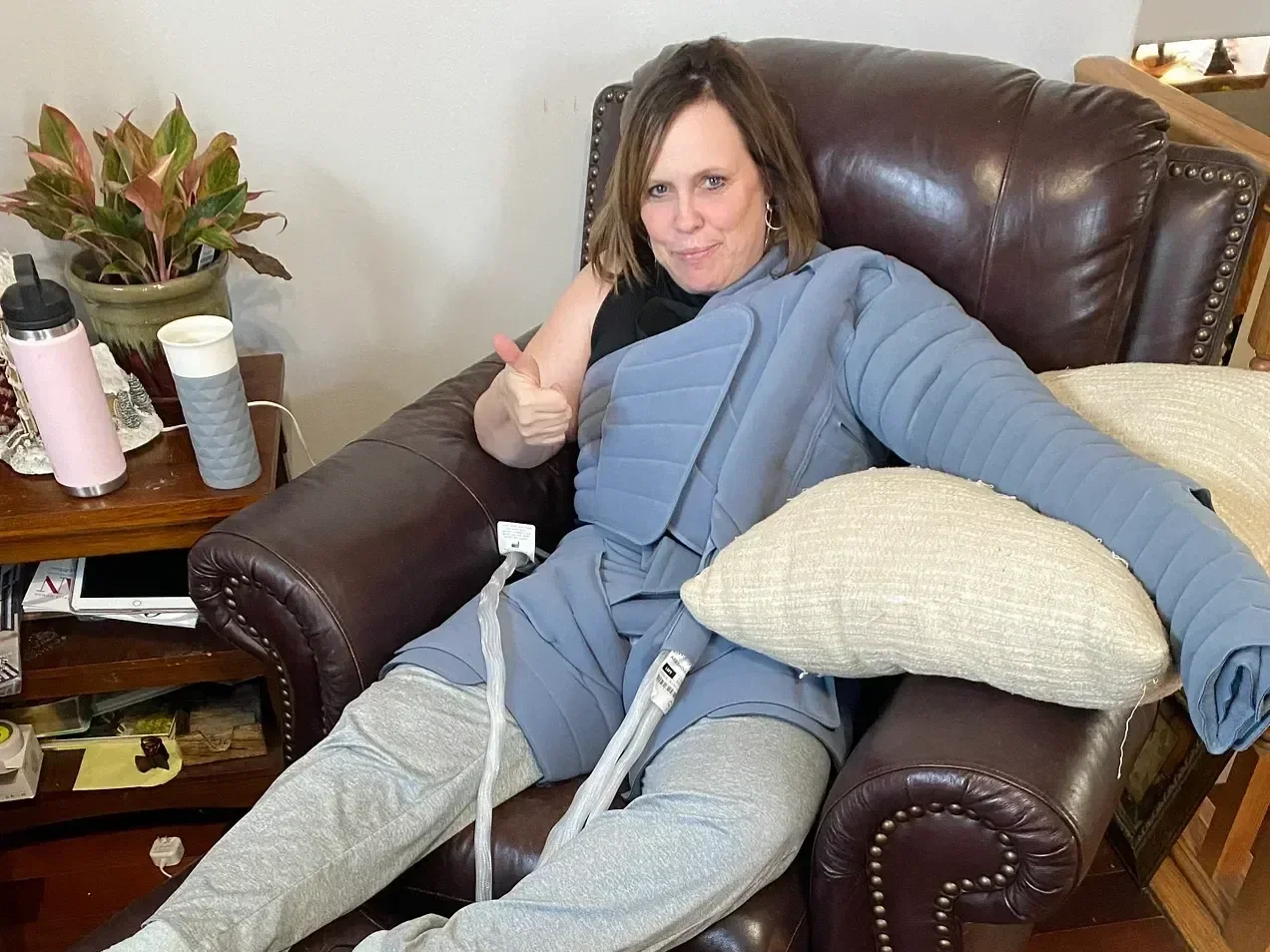
I didn’t set out to build a sanctuary. I set out to find somewhere I could sit that didn’t hurt.
That’s a humbler beginning than the Pinterest version of this story would suggest, but it’s the true one.
When I was going through chemo, my body became a stranger to me. A stranger who reacted unpredictably to almost everything.
The bed was too flat.
The couch was too soft and too low and too far from the bathroom.
The kitchen chairs were upright like a punishment.
I needed somewhere to be, because being was the only thing I could really do anymore.
So Ferlin and I bought a chair.
It was a beige chaise, a long, low thing that let me lie down without lying down. Sit up without sitting up. It looked like something my grandmother might have chosen, and I was forty years old, and I didn’t care.
I had stopped caring about a lot of things by then.
What I cared about was finding a corner of the world where my body could exhale. That chaise carried me through chemo and the early years after. When it finally wore out — and chairs do wear out when you’re using them the way I was using mine — we replaced it with a recliner.
And that recliner has been with me through everything else.
The DIEP reconstruction surgery.
The sepsis that nearly took me.
Both knee replacements.
Last October, when I broke my foot and couldn’t walk.
And now, twice a day, every day, the lymphedema pump treatments that take an hour each.
And the nights. The nights when pain wakes me at 2 a.m., and I can’t go back to sleep, so I come downstairs and sit in the recliner and wait the pain out until morning.
It’s been seventeen years since the first chair.
Two chairs.
One corner.
One constant role: Somewhere to be while my body is doing the hard thing it has to do.
I want to talk about this, not the chairs specifically, but what they represent, because I think there’s something most people don’t know until they need it.
And by then, they’re too tired to figure it out.
When you’re going through something hard, you need a place.
A specific place.
A built place.
Not a whole room.
Not an aesthetic.
Not something worthy of a home magazine spread.
Just a square footage of your home that has been deliberately set up so that when you collapse into it, and you will collapse into it, everything you need is within reach without you having to stand up.
For me, that means the recliner, yes.
But it also means the small table next to it. The basket beside the table. The lamp with the warm bulb. The throw that lives over the armrest. The water bottle that sits there whether I’m using it or not. The book I’m not actually reading. The scripture card I’m definitely not reading either, but is somehow comforting just to see.
The phone charger snaking up from the floor.
The pump and the sleeves, ready for the next treatment.
Over seventeen years, this corner has been added to and subtracted from more times than I can count.
The chemo years had different needs than the recovery years.
The recovery years had different needs than the surgery years.
The lymphedema management has its own requirements.
I need somewhere to elevate.
Somewhere to do the sleeves.
Somewhere to just be still on a hard day.
The corner has accommodated all of it.
Here’s what I want to say to you, if you’re reading this from one of those seasons:
Your home does not need to be Pinterest. It needs to be functional for the body you actually have, not the body you wish you had.
I’ve watched friends apologize for their setups when I’ve visited them in hard seasons.
The pillow nest on the couch.
The pile of medications.
The blanket that hasn’t been folded.
The lamp that’s been on a side table since whenever.
And I want to take their hands and say: No. No, this is right. You’ve done it right. This is what survival looks like, and it doesn’t need to look like a magazine.
What it needs to look like is enough. Enough softness to land. Enough warmth to not shiver. Enough light to not feel like you’re disappearing into the gray. Enough of your own things — books, scripture, a candle, a photo, anything that says I am still here, this is still me — to remember who you are when your body has stopped feeling like it belongs to you.
The chairs didn’t save me.
God saved me.
Ferlin saved me.
The chemo and the surgeons and the prayers and the years saved me.
But the chairs gave me somewhere to be while the saving was happening. And the saving, it turns out, didn’t stop. It just kept finding new things to save me from.
So if you are in the middle of your own hard thing right now, whatever it is, cancer or recovery or grief or chronic illness or the long, slow management of a body that doesn’t quite work the way it used to, I want you to give yourself permission to build your own place.
Tomorrow on the Hope Lives Now blog, I’m going to walk through exactly what’s in mine, with links to the things I actually use, because I get asked about this more than almost anything else.
But before any of that, before you click anything, before you buy anything, I want you to know: You’re allowed to have a place. You’re allowed to take it seriously. You’re allowed to spend money and space and care on building a square footage of your home that exists for the version of you that needs holding.
The chair I’m sitting in right now is the second one. It’s seen me through more than I would have believed, at forty, was still coming. And it will probably wear out too eventually.
We’ll replace it again.
And the corner will keep doing its quiet work.
I still need it.
I’m starting to suspect I always will.
And I think that’s okay.