When You Don’t Know What to Do, Build a Hope Basket
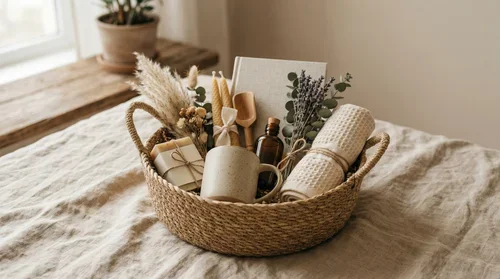
When someone you love is diagnosed with cancer, the first instinct is often immediate and urgent:
I need to do something.
You want to help. You want to make the phone calls stop, take away the fear, carry some of the weight, or somehow make the next few months less frightening.
But you cannot fix the diagnosis. You cannot promise that everything will be okay. And sometimes you do not even know what to say.
That helplessness can make people pull away—not because they do not care, but because they care so much and have no idea what caring is supposed to look like now.
A Hope Basket gives that love somewhere to go.
The First Hope Basket
The idea for a Hope Basket did not begin as a product or a perfectly organized gift guide. It began as a way to answer that desperate need to do something.
Over the years, my family and I have assembled baskets for friends, relatives, women beginning treatment, men facing difficult diagnoses, and people trying to make their way through long seasons of uncertainty.
No two baskets have looked exactly alike.
One was created for someone who loved the Nebraska Cornhuskers. Another was shaped around a man who enjoyed watching birds from his sunroom. Some have included blankets, journals, snacks, devotionals, warm socks, puzzle books, or small gifts that made sense only because we knew the person receiving them.
And yes, at least one included fake birds. That may sound silly, but silliness has a place in hard seasons too.
A person with cancer does not stop being herself when she becomes a patient. She still has favorite foods, private jokes, hobbies, preferences, and things that make her laugh.
A thoughtful basket remembers the person underneath the diagnosis.
The Basket Is Just the Container
It would be easy to think the value of a Hope Basket comes from what is inside it.
The soft blanket. The beautiful journal. The candle, the tea, the book, or the handwritten card.
Those things can certainly bring comfort. But the basket carries a message much larger than any one item:
I see you. I love you. I am not going anywhere.
One woman who received a basket described it this way:
“It mattered. Every item in it mattered. Even the fake birds. Somebody thought of me. Somebody cared.”
That is the heart of it.
She was not saying the basket changed her diagnosis. She was saying it changed a moment within it.
For one afternoon, she was reminded that someone had thought carefully about who she was, what she loved, and what might make a difficult day feel slightly less lonely.
Sometimes that is what hope looks like. Not a grand solution. Not the perfect words.
Just a deliberate act of love placed into someone’s hands.
What Belongs in a Hope Basket?
There is no single formula, and you do not need to buy everything you see on a care-package checklist.
The best Hope Baskets usually include a mixture of four things:
Comfort and Softness
These are the sensory comforts that help the body feel cared for—a soft throw, warm socks, a robe, an eye pillow, a silk pillowcase, or gentle hand cream.
Treatment rooms can be cold. Skin can become sensitive. Ordinary physical comforts begin to matter in ways they may not have before.
When choosing scented products, remember that chemotherapy can make the sense of smell unusually sensitive. Light, clean scents—or unscented products—are generally safer than anything heavily perfumed.
Quiet Company
Cancer treatment contains a surprising amount of waiting.
Waiting for appointments. Waiting for lab results. Sitting in a treatment chair. Resting on the couch when the body is too tired to do much else.
A journal, devotional, book of short readings, puzzle book, coloring book, or simple card game can offer gentle company without demanding too much energy.
Choose items that can be picked up and set down easily. Long, complicated books may be difficult to follow when fatigue or brain fog is present.
Spark and Lightness
This is the part people sometimes forget.
Include something that makes the basket feel like it belongs to this particular person.
Her exact favorite snack—not a healthier substitute.
A drink she loves. Pretty stationery. A gift card to her favorite coffee shop.
Something connected to her hobby, team, sense of humor, or personality.
Maybe even something ridiculous that exists for no other reason than to make her smile.
The smallness is often where the love lives.
Faith and Hope
For someone whose faith is meaningful to her, include one or two items that quietly remind her that she is held by something larger than this moment.
That might be a Scripture card, a devotional, a small Bible, a wooden cross, a prayer shawl, or a simple keepsake she can place beside her bed.
These items do not need to carry a sermon.
They are simply reminders:
God sees you.
You are loved.
You are not walking through this alone.
The Most Important Item Costs Almost Nothing
Every Hope Basket should include a handwritten note.
It does not need to be long, poetic, or profound. In fact, simpler is often better.
You might write:
I love you. I am thinking about you every day. This basket is filled with small things that I hope make one afternoon a little easier. You do not need to respond, and you do not need to be anything other than exactly who you are today. I am here.
Do not feel pressured to explain the diagnosis, offer advice, or promise that everything will work out.
Tell the truth.
Tell her you love her.
Tell her she does not have to carry your emotions or make you feel better.
Tell her you are staying.
Long after the snacks are eaten and the candle is gone, that note may still be tucked inside a drawer.
It Does Not Have to Be Large or Expensive
A typical Hope Basket may cost somewhere between $75 and $100, but care is not measured by the size of the basket.
You can create a smaller version with a soft blanket, one favorite treat, and a sincere note.
You can gather items over several weeks.
You can invite friends, family members, or coworkers to contribute one item each.
And when assembling a full basket is not possible, send one thoughtful gift.
One book.
One pair of warm socks.
One meal-delivery gift card.
One handwritten letter.
That is not a lesser expression of care.
The goal is not to impress the person receiving it. The goal is to help her feel known.
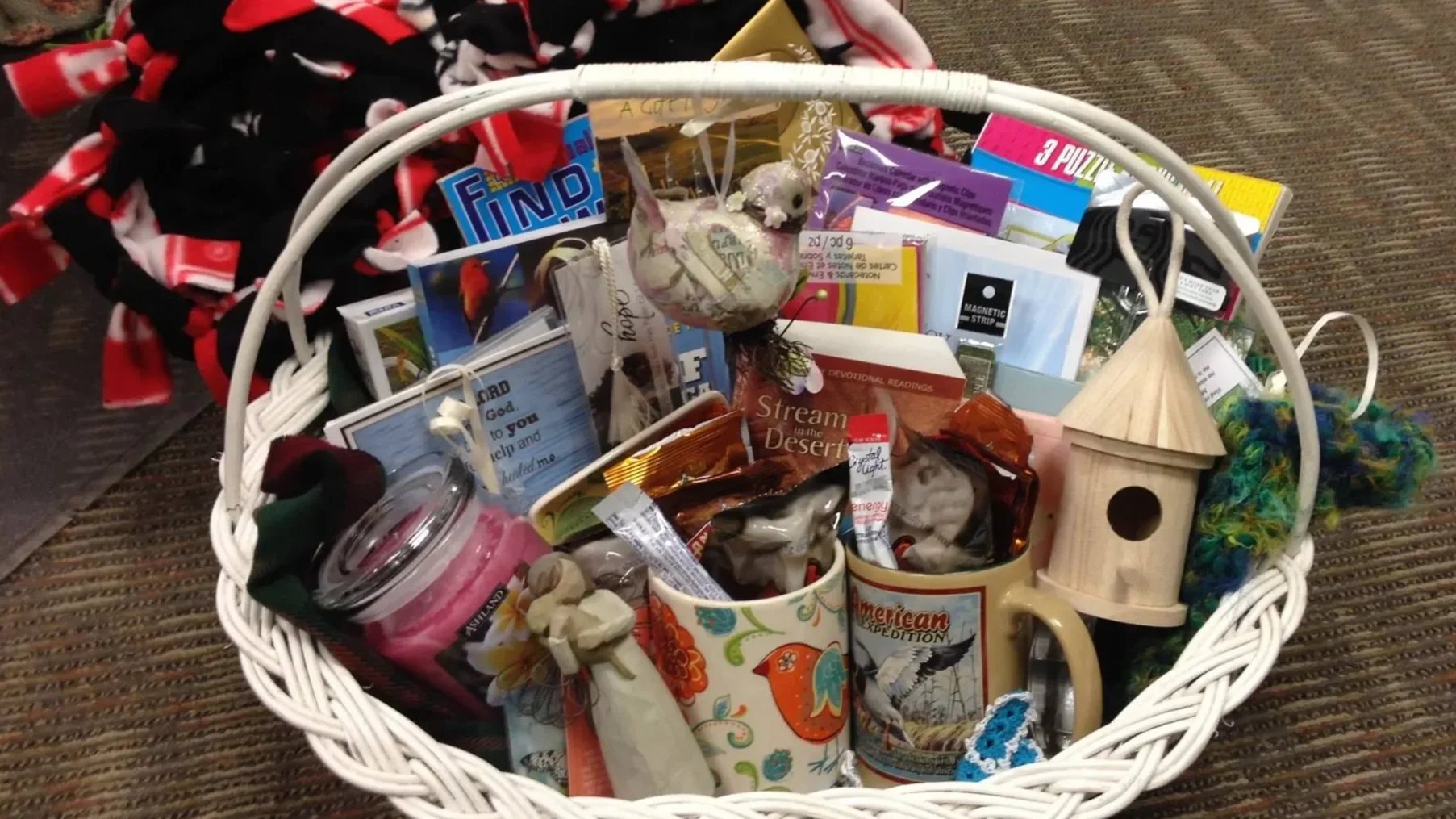
A real Hope Basket does not need to look perfectly styled. This one was created around the recipient’s love of birds, puzzles, faith, warm blankets, and familiar comforts. The beauty was not in the presentation. It was in being known.
Start With the Person, Not the Diagnosis
Before shopping, pause and think about who you are building the basket for.
What does she enjoy?
What comforts her?
What makes her laugh?
What colors does she love?
Is faith important to her?
Does she enjoy reading, crafting, gardening, sports, music, puzzles, or watching birds outside her window?
Are there smells, foods, or products she cannot tolerate?
A generic gift basket says, Someone cares.
A personal basket says, You are specifically known and loved.
That distinction matters—especially in a season filled with medical forms, waiting rooms, patient numbers, and appointments where life can begin to feel painfully impersonal.
You Cannot Fix This, but You Can Do This
One of the hardest parts of loving someone through cancer is accepting how much is outside your control.
You cannot take the treatment for her. You cannot remove every fear. You cannot carry the entire road. But you can gather a few thoughtful things.
You can wrap them with care. You can write her name on a card. You can place something tangible in her hands and remind her that she has not disappeared inside her diagnosis.
The basket is not a cure. It is not a solution.
It is a small, deliberate act of love.
And sometimes, in the middle of the hardest news, a small act of love is exactly where hope begins.
Ready to Build a Hope Basket?
Explore the complete online Hope Basket guide for thoughtful gift ideas, practical tips, and recommended items.
You can also download the free printable Hope Basket guide to take with you while you shop. It includes a categorized checklist, guidance for writing your note, and a prayer for the person building the basket.
You do not have to include everything.
Begin with the person you love.
Choose a few things that say:
I see you. I love you. I am not going anywhere.