Survival Is Not the Same as Living
Survival and living are not the same thing.
It took me years to understand the difference—and I’m still figuring out the living part.
For a long time, I thought survival was the finish line. Get through the diagnosis. Get through the surgery. Get through the chemo, the radiation, the scans, the waiting rooms. Survive, and then—then—you get your life back.
Nobody tells you that surviving and living can sit in the same body for years without ever quite shaking hands.
I know how to survive. I’ve had a lot of practice.
Fifteen surgeries’ worth. Sepsis. Dysautonomia that doesn’t care what is on my calendar. Lymphedema that reminds me every single day that this body has been through something.
Survival, for me, became a skill—a muscle I built without meaning to.
You learn to white-knuckle your way through a bad scan. You learn to function on too little sleep and too much fear. You learn to keep showing up to work, to dinner, to church, with a smile that is 70 percent real and 30 percent performance, because everyone needs you to be okay—and some days it feels easier to appear okay than to explain that you’re not.
That’s survival. And it’s not nothing.
But it is not the same as living.
Living is different. Living is slower, and somehow scarier, because it asks something survival never did.
Survival asks you to get through today.
Living asks you to actually be here for it—the good and the bad, the boring Tuesday and the bone scan—without numbing out or rushing past either one.
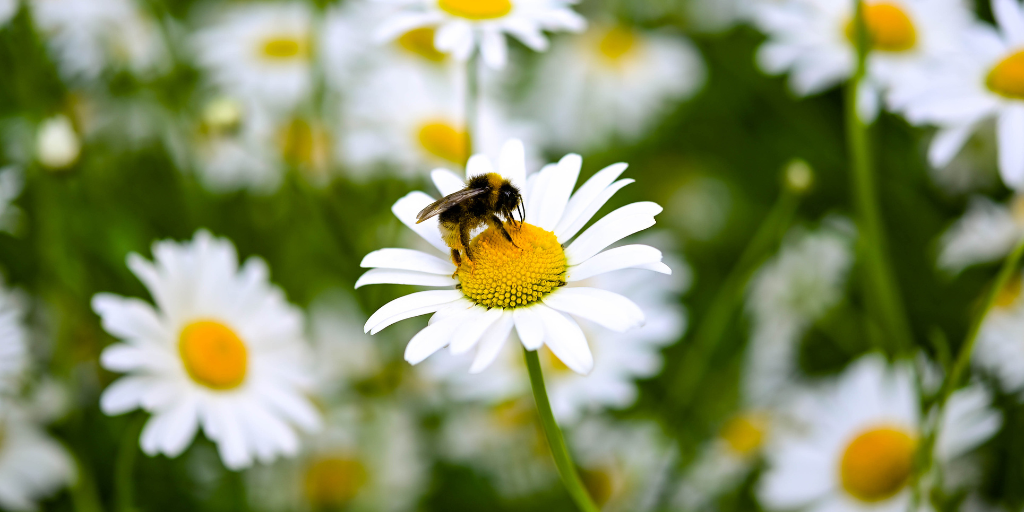
I remember sitting on my front step years ago, supposedly resting, supposedly recovering, when I heard a bee buzzing inside a flower. It sounded like the most remarkable thing I had ever heard. I had been so busy surviving—fighting, managing, getting through—that I had forgotten a bee could sound like that.
The moment didn’t cure anything. It didn’t change a single test result. But it was the first time in a long time that I was living instead of simply enduring.
Here’s the part I didn’t expect:
Living doesn’t begin when the scans come back clean.
It doesn’t begin when the fear finally disappears, because for those of us living with something ongoing, the fear may never fully disappear.
I am seventeen years into this, and I still experience scanxiety. I still have days when my body reminds me that it doesn’t fully trust itself—and some days, I don’t fully trust it either.
Had I waited for the all-clear to start living, I would still be waiting.
Living started when I stopped treating my unfinished healing as a holding pattern and started treating it as my actual life.
I think many of us—survivors, caregivers, anyone who has spent a season simply trying to get through—get stuck mistaking the absence of crisis for the presence of life.
We come out the other side of the hardest part, exhale, and assume living will simply resume on its own.
But living is not a default setting.
It is something we choose, on purpose, even while the hard thing may still technically be happening.
So if you are like me—still managing something, still carrying scars, some visible and some not, still doing the math on what your body can handle today—I want you to hear this:
You do not have to wait for survival to be finished before you start living. You can do both.
Clumsily. Imperfectly. At the same time.
I am still learning how. Some days I am better at it than others.
But I would rather be fumbling my way toward living than become really, really good at merely surviving.
God was the anchor.
Hope was the thread.
And somewhere in the middle of all that holding on, I am learning not only how to survive my life—
I'm learning to actually live.
—Kim