The Scoreboard Doesn’t Tell the Whole Story
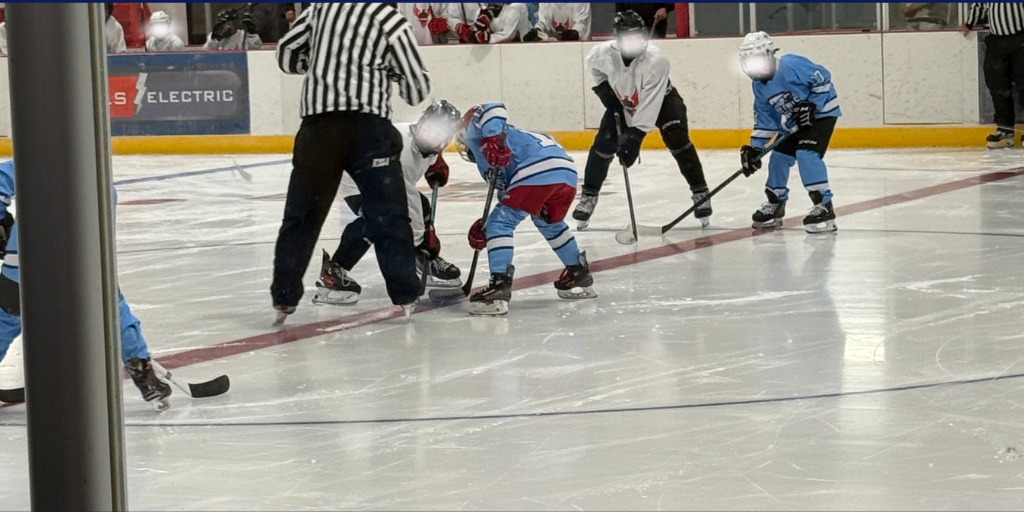
I spent the weekend watching hockey and came away with two important conclusions.
First, ice arenas are wonderful places to be when it is 95 degrees outside.
Second, when it comes to hockey, you always win…even if the scoreboard says you lost.
Apparently, the officials are not umpires. They are referees — or “zebras,” if you want to sound like you know what you’re talking about (according to a 9-year-old 🙂). There are also good penalties and bad penalties, which seems confusing since I grew up believing a penalty was always something to avoid.
Thankfully, I was assured that our granddaughter’s hooking penalty was a good one.
I am still learning.
We watched four games over the weekend. Unfortunately, her team did not advance to the championship, but that does not mean we did not witness plenty of winning. In the second game, our granddaughter scored the game-winning goal. In the fourth, she made a beautiful back pass that had us cheering in the stands.
There were fast skates, hard falls, flying pucks, close calls, and more than a few moments when this grandma held her breath.
There were penalties, too. I will admit I cheered a little louder than necessary when one of the girls on our granddaughter’s team received a penalty for roughing. The teams were made up mostly of boys, and there was something deeply satisfying about watching that young lady make it clear she was not going to be pushed around.
I am old-fashioned enough to notice boys and girls, but perhaps progressive enough to cheer when a girl gets sent to the penalty box for roughing.
I also learned that three penalties can get you removed from the game. We saw that happen to a player on the opposing team during the first period.
She was a girl, too. Apparently, hockey girls are not to be underestimated.
But the biggest lessons of the weekend had nothing to do with penalties, passing, or even scoring goals.
They were about what happens when you do not win.
A team may take twenty-three shots on goal and only score two or three times. Think about that.
Twenty shots that did not go in. Twenty moments when a player could become discouraged, slow down, or stop trying.
Instead, they keep skating. They take another shot. They pass the puck. They reposition. They try again.
Hockey players do not have time to stand in the middle of the ice mourning the shot they missed. The game keeps moving, and they have to move with it.
Life is much the same.
We often focus on the few shots that go in — the achievement, the answered prayer, the opportunity, the moment everything finally works. But most of life is made up of the other shots. The attempts that missed. The plans that changed. The doors that stayed closed. The work that did not produce the outcome we hoped for. The seasons when we gave everything we had and still did not make it to the championship game.
We tend to call those moments losing. But perhaps they are where perseverance is built.
Hockey also involves a remarkable amount of falling down. Players collide. Skates tangle. Someone gets checked into the boards. One second a player is flying across the ice, and the next she is flat on her back.
What impressed me most was not that they fell. It was how quickly they got back up. There is no time to stay down and feel sorry for yourself. The puck is already moving in the other direction.
That may be one of the most important lessons any of us can learn.
Falling is not failure.
Staying down is where we begin to lose.
Sometimes courage does not look like scoring the winning goal. Sometimes it looks like pushing yourself back onto your skates and rejoining the play.
The weekend also reminded me that some of the most important victories happen far away from the scoreboard.
On Friday evening, long after the first game had ended, I had to take my husband to the emergency room. Another hockey family stepped in so our granddaughter could get some sleep and be ready to play the next day.
Thankfully, my husband is all right.
But in that moment, the tournament became about more than hockey. It became about community.
It was adults encouraging children who were not their own. Families helping one another without hesitation. Teammates learning to trust each other. Coaches teaching leadership, discipline, and respect.
It was watching the players thank the referees after the game, even when they did not agree with every call and did not get the win they wanted.
It was learning how to handle disappointment without allowing disappointment to decide your attitude.
It was friendships formed among children who live in different towns and even different states.
It was trying new foods, visiting another community, and experiencing a culture different from your own.
It was confidence growing quietly each time a player stepped onto the ice.
None of those things showed up on the scoreboard. Yet they may have mattered more than the final score.
We often measure winning by what can be counted.
Goals.
Points.
Trophies.
Sales.
Followers.
Awards.
Answered prayers.
But God does some of His deepest work in the things that cannot be easily measured.
Character. Compassion. Courage.
Humility. Friendship. Perseverance.
The willingness to try again.
A scoreboard can tell you which team scored the most goals.
It cannot tell you who encouraged a discouraged teammate.
It cannot measure the courage it took to return to the ice after a hard fall.
It cannot show the confidence being built inside a young girl who discovers she is stronger and more capable than she realized.
It cannot record the kindness of a family who stepped in when another family needed help.
It cannot measure grace.
Sometimes winning looks like scoring the game-winning goal.
Sometimes winning looks like making a beautiful pass that helps someone else succeed.
Sometimes winning looks like taking twenty-three shots even though only two found the net.
Sometimes winning looks like thanking the referees after a disappointing loss.
And sometimes winning looks like simply getting back up before the puck gets away.
Our granddaughter’s team did not make it to the championship game that weekend.
But she scored.
She passed.
She fell.
She got back up.
She learned.
She grew.
She made memories and friendships that will last long after the final score is forgotten.
I would call that a win.
Maybe losing is not always the opposite of winning.
Maybe sometimes losing is simply the place where a different kind of victory is being formed.