What Every Caregiver Should Know Before October Ends
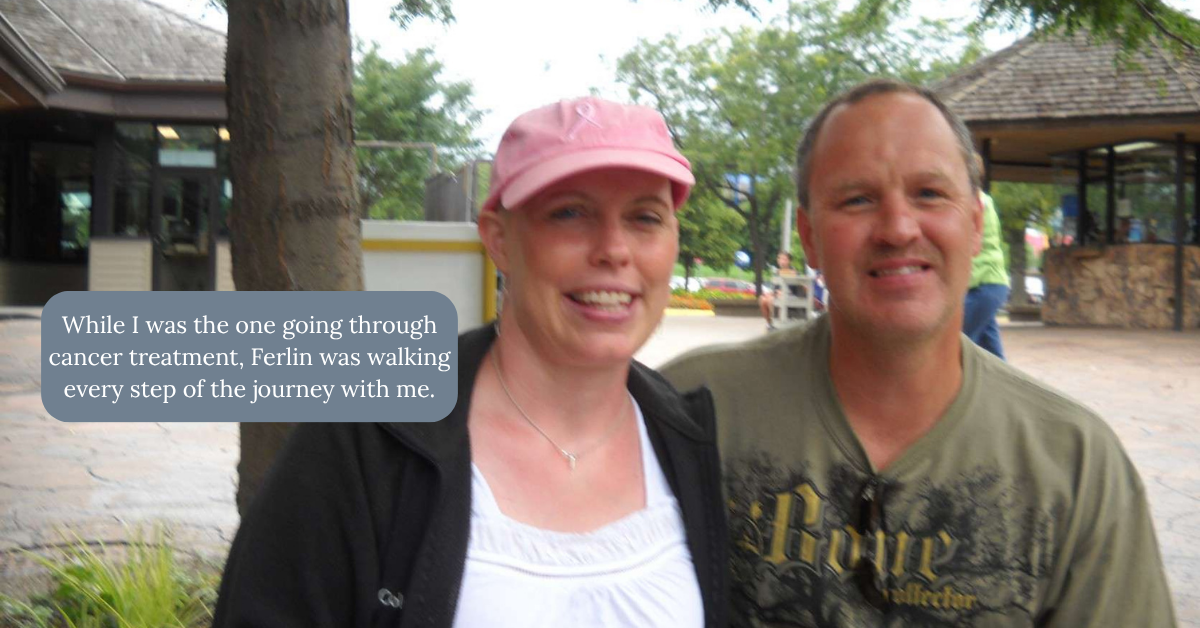
Taken between chemotherapy and radiation, this photo reminds me that while I was the one in treatment, Ferlin was walking every step of the journey, too.
Because sometimes the people who love us most need a little help knowing how to help.
October is Breast Cancer Awareness Month, and everywhere we look, we're reminded of the importance of early detection, mammograms, and recognizing the signs of breast cancer. These are important conversations, and I'm thankful we're having them.
But before October comes to an end, there's another conversation I think we need to have, and it's one that doesn't always get the attention it deserves.
We need to talk about the caregivers.
The husbands who sit beside their wives during chemotherapy, trying to be strong while quietly wondering what the future holds. The daughters who rearrange their schedules to drive Mom to another appointment. The friends who want to help but aren't quite sure what to say, and the family members who are doing their best to hold everything together while their own hearts are hurting.
When someone we love is diagnosed with cancer, we want to make things better. We want to take away the fear, ease the pain, and somehow make life feel normal again.
But cancer doesn't come with an instruction manual, and neither does caring for someone who has it.
Having walked through breast cancer myself, and now living with some of its long-term consequences, I've learned a few things about what support really looks like. Some of those lessons came during treatment, while others have taken years to understand.
And I think they're worth sharing.
Cancer affects so much more than the body
When I was diagnosed with triple-negative breast cancer, there was certainly no shortage of medical information to process. There were treatment decisions to make, appointments to attend, and side effects to prepare for.
But what doesn't always show up on the treatment calendar is everything happening inside a person's heart and mind.
The fear that sneaks in when the house gets quiet. The exhaustion that has nothing to do with how much sleep you've had. The sadness over changes to your body, your independence, and the life you thought you would be living.
And sometimes, there's guilt.
Guilt because your family is rearranging their lives around your illness. Guilt because you're too tired to participate in something you once enjoyed. Guilt because everyone is trying so hard to help, and you still find yourself having a really lousy day.
I remember how difficult it could be to navigate those emotions, even with a loving family and wonderful friends surrounding me.
And here's something I wish every caregiver understood: You don't have to fix every emotion your loved one experiences.
Sometimes we need permission to be sad without someone immediately trying to cheer us up. Sometimes we're frustrated, scared, or just plain tired of dealing with cancer, and we need someone who can listen without feeling responsible for making everything better.
That doesn't mean we aren't grateful for the love and support we're receiving. It simply means we're human.
The end of treatment isn't always the end of the struggle
This is probably one of the biggest things I wish more people understood about cancer.
When treatment ends, everyone celebrates, and rightly so! Finishing chemotherapy or radiation is a tremendous milestone, and after months of appointments, medications, and uncertainty, there's plenty of reason to be thankful.
But while the people around us may be ready to close the cancer chapter, those of us who have lived through it sometimes discover that the story isn't quite finished.
For me, that has meant learning to live with lymphedema, a chronic condition that developed following my breast cancer treatment.
Years later, I still wear compression garments, use a pneumatic compression pump, and make daily decisions based on how my arm is feeling. Some days it's well controlled, and other days I find myself dealing with swelling, discomfort, and frustration.
And that's only one part of survivorship.
There are also changes in body image, lingering fears about recurrence, and the emotional adjustments that come with realizing life may never look exactly as it did before cancer.
I don't share this because I want people to feel sorry for me. I have a wonderful life, and I'm incredibly thankful for it.
But I do want caregivers to understand that just because someone looks healthy, returns to work, or starts participating in everyday activities again doesn't necessarily mean everything has returned to normal.
Sometimes the greatest gift you can give a cancer survivor is remembering that their journey didn't end when the treatments did.
You don't need to find the perfect words
I think one reason people sometimes pull away when someone is diagnosed with cancer is because they're afraid of saying the wrong thing.
And I understand that. Cancer is scary, and when someone we care about is hurting, we don't want to make things worse.
But here's what I've learned: Most of us aren't expecting a perfectly worded response.
We simply want to know we're not alone.
You don't need to explain why something happened or remind someone that everything happens for a reason. You don't need to compare their experience with someone else's cancer journey, and you certainly don't need to promise that everything is going to turn out okay.
Sometimes a simple, "I don't know what to say, but I love you, and I'm here," is more comforting than an entire conversation filled with advice.
I also think it's important to remember that not every conversation needs to be about cancer.
There were times during my treatment when I wanted to talk about what I was going through, but there were also times when I wanted to hear about ordinary life. Tell me what your kids are doing, share something funny that happened at work, or invite me into a conversation that has absolutely nothing to do with medical appointments.
Cancer may have become a significant part of my life, but it wasn't the only part of who I was.
And I appreciated the people who remembered that.
Sometimes the smallest acts of kindness make the biggest difference
When someone is going through cancer treatment, even ordinary tasks can become overwhelming.
Cooking dinner, grocery shopping, keeping up with laundry, or simply finding the energy to return a phone call can feel like one more thing on an already exhausting list.
And while the offer, "Let me know if you need anything," comes from a loving place, it can also put another decision on the shoulders of someone who is already overwhelmed.
Sometimes it's easier when someone offers something specific.
Perhaps it's a friend who says, "I'm making soup tomorrow. Can I bring some over?" Or a neighbor who offers to mow the lawn while you're recovering from surgery.
It doesn't have to be elaborate or expensive. In fact, some of the most meaningful acts of kindness are the ones that quietly make an ordinary day a little easier.
Of course, it's important to respect what the person actually wants or needs. Not everyone wants visitors, and not everyone is comfortable accepting help. Some people need company, while others desperately need a quiet afternoon to rest.
Which brings me to a question I think we could all get better at asking:
"What would feel helpful to you right now?"
Not what we think should be helpful, but what would genuinely make life easier for the person we're trying to support.
And sometimes the answer might be, "Nothing today, but thank you for asking."
That's okay, too.
Caregivers need someone caring for them
There's another side of cancer that I don't think we talk about nearly enough, and that's the toll it takes on the people who love us.
I remember coming home after one of my hospital stays feeling incredibly weak. Ferlin carried our bags into the house, helped me inside, and got me settled into the little oasis he had created for me so I could rest and recover.
Once he knew I was comfortable, he got busy cleaning.
And I don't mean a little straightening up. He was doing the routine housecleaning along with extra sanitizing because my white blood cell count was so low. I remember sitting there watching him run around the house cleaning like a madman, trying to make everything as safe as possible for me.
My husband was doing what he always did. He was taking care of me.
But watching him that day, I realized something I hadn't fully considered before. While I was the one going through cancer treatment, Ferlin was carrying a tremendous amount of responsibility, too.
He was worried about my health, trying to keep our home safe, and doing everything he could to make life easier for me. And because I was so weak, there wasn't much I could do to help him.
That's when I knew we needed to let other people come alongside our family.
Our church family stepped in and began helping with the housecleaning while I was at chemotherapy. It was such a practical gift, but it meant so much more than having a clean house. It took something off Ferlin's shoulders and gave him a little room to breathe.
I also remember someone bringing us a box of goodies that included some of his favorite snacks.
Now, that might not sound like a big deal, but it was.
Someone had thought about Ferlin. Not just about what he could do for me, but about what might bring him a little comfort and encouragement during a difficult season.
I think we sometimes forget that caregivers are walking through their own version of the cancer journey. They have fears and frustrations, and they get tired. Often they're trying to be strong for the person they love while quietly setting aside their own needs.
And sometimes they need someone to notice.
If you're supporting a family affected by cancer, don't forget to check on the caregiver. Maybe you can take something off their to-do list, give them an opportunity to rest, or surprise them with a little something you know they'll enjoy.
And if you're the caregiver, please know that you don't have to do everything yourself. Allowing someone else to help doesn't mean you're doing any less for the person you love.
Sometimes accepting that help is one of the most loving things you can do for your entire family.
Love doesn't have to get everything right
As I look back on my own cancer journey, I don't remember whether everyone said the right thing or offered help in exactly the right way.
What I remember is the love.
I remember the people who showed up, the prayers offered on my behalf, and the kindness that reminded me I wasn't walking through one of the hardest seasons of my life alone.
Were there awkward moments? Of course. I'm sure there were times when people didn't know what to say, and there were probably times when I didn't know how to receive their kindness very gracefully, either.
We're all learning as we go.
And maybe that's something we need to give one another a little more grace about.
If you're caring for someone with cancer, please don't let the fear of doing something wrong keep you from reaching out. You don't need to have all the answers, and you certainly don't need to make everything better.
Be willing to listen. Pay attention to what your loved one needs, even when those needs change from one day to the next. And remember that your presence can be a tremendous gift, even when you feel like you're not doing enough.
As Breast Cancer Awareness Month comes to an end, my hope is that we carry this awareness beyond October.
Because cancer doesn't follow a calendar, and neither should our compassion.
There will still be people sitting in chemotherapy chairs in November. Families will still be navigating difficult decisions in December, and survivors will still be learning how to live with the lasting effects of treatment long after the pink ribbons have been put away.
And the people who love them will still need encouragement, understanding, and support.
Sometimes hope looks like someone simply choosing to keep showing up.
And that is a beautiful gift.
A little help for the journey
If you're supporting someone through cancer and wondering how to help in meaningful, practical ways, we've created a free resource just for you.
How to Actually Help Someone with Cancer offers ideas for showing up with compassion, understanding, and practical support when someone you love is walking through a difficult season.
And if someone in your life has recently received a breast cancer diagnosis, our Just Diagnosed Guide can help them begin navigating those overwhelming first days.
You don't have to have all the answers to make a difference in someone's life.
Sometimes you just need a willing heart and the courage to show up.
Hope lives now, even in the middle of the hard.