The Emotional Side of Cancer: The Feelings No Treatment Plan Prepares You For
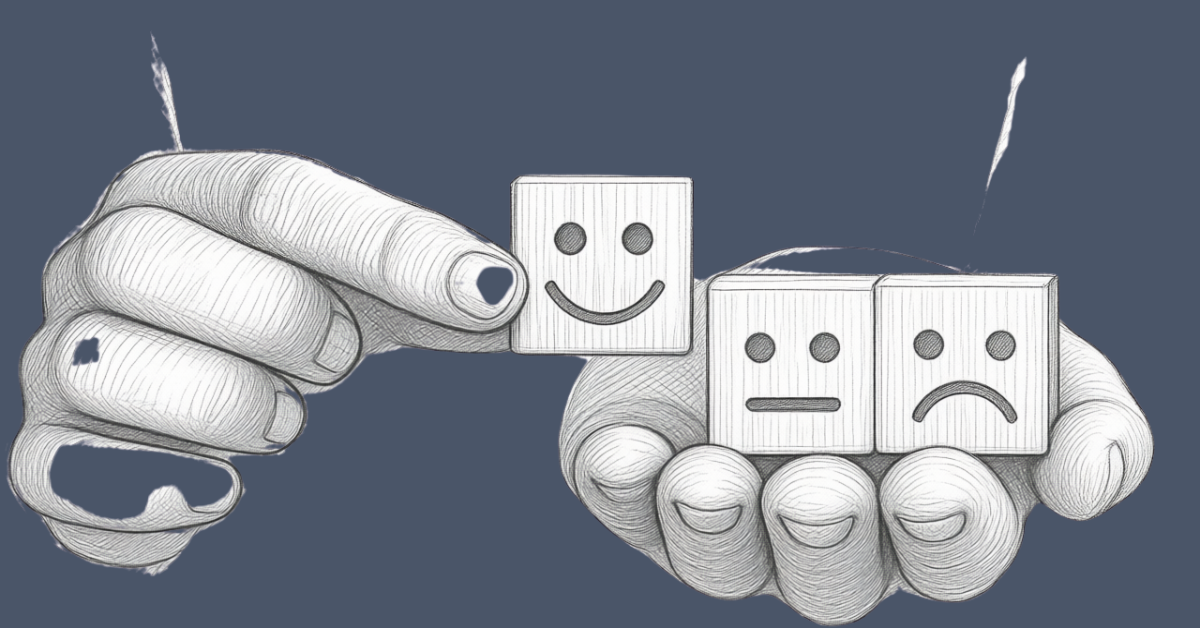
There are things no treatment plan can map.
Doctors can explain surgery, outline chemotherapy, schedule scans, prescribe medications, watch lab results, and tell you what side effects to expect. But there is another part of cancer that does not always fit neatly into the treatment plan: the emotional part.
It shows up in the middle of the night, in the waiting room, in the mirror, and in the quiet after everyone else has gone home. Cancer can bring fear, grief, overwhelm, anger, loneliness, vulnerability, uncertainty, and questions about faith. Sometimes those emotions can feel almost as disorienting as the diagnosis itself.
If that is where you are, I want you to hear this clearly:
You are not handling cancer badly. You are human.
Cancer Affects More Than the Body
When cancer enters your life, it can change far more than your medical chart. It may change how safe the future feels, how you see your body, how much energy you have, how much help you need, and even how your relationships feel.
It can change how easily you make plans, how you pray, and how you think about life before cancer and life after it.
Some days, you may feel hopeful. Other days, you may feel scared or angry. You may even feel grateful and grieving at the same time. There is no emotional checklist you are supposed to complete in the correct order.
You may move back and forth. You may feel several things at once. You may think you have worked through one emotion only to have it return around a scan, an anniversary, a new symptom, or simply a difficult day.
That does not mean you are going backward.
It means this is complicated.
Fear
Fear often lives in the unknown.
What will treatment be like? Will it work? What will the scan show? Will cancer come back? What happens next?
Fear has a way of carrying us far into a future we cannot yet see. Sometimes the work is not eliminating fear altogether. Sometimes it is simply bringing the horizon closer.
What do I need today? What is the next step? What is true right now?
Read: When Fear Gets Loud →
Grief
Grief is not only about death.
Cancer can bring losses that other people do not always see. Your body may change. Your energy may change. Plans may disappear, relationships may shift, and the sense of safety you once had may feel different.
You can be deeply grateful to be alive and still grieve what cancer changed.
Those two truths can live together.
Read: Grief After Cancer: Mourning What Changed →
Overwhelm
Cancer rarely comes as one thing. It comes with appointments, phone calls, medications, paperwork, decisions, side effects, insurance questions, and people asking for updates.
You may feel like you have suddenly become the project manager of your own crisis.
If your brain feels full, your patience is thin, or you simply cannot handle one more thing, that does not mean you are failing. It may mean you are carrying more than one person was meant to carry alone.
Read: When Cancer Feels Like Too Much →
Anger
Sometimes cancer makes you angry.
You may be angry at the diagnosis, at your body, at the timing, at people who disappear, or at people who say the wrong thing. You may feel angry that everyone else seems to keep living normally while your life has changed.
You may even be angry with God.
Anger is not proof that you are bitter or faithless. Sometimes anger is simply the honest response to something that feels deeply unfair.
Read: When Cancer Makes You Angry →
Loneliness
Cancer can feel lonely even when you are surrounded by people who love you.
Others can sit beside you, drive you to appointments, bring meals, pray, and listen. Their presence matters deeply. But there may still be parts of the experience they cannot fully understand.
Sometimes we need people who love us.
And sometimes we also need people who understand something about the road we are walking.
Read: When Cancer Feels Lonely →
Vulnerability
Cancer can make vulnerability very physical.
It can look like hospital gowns, scars, needing help bathing or dressing, letting someone else drive you, depending on other people, or living in a body that suddenly feels unfamiliar.
For those who are used to taking care of everyone else, needing help can be especially difficult.
But vulnerability is not weakness, and strength is not proven by never needing anyone.
Read: When Cancer Makes You Feel Vulnerable →
You May Feel More Than One Thing at Once
Emotions do not stay neatly in their own categories.
Fear can become overwhelm. Anger may have grief underneath it. Loneliness can make vulnerability harder. Grief can bring fear about what comes next.
And sometimes you can feel thankful, angry, hopeful, frightened, and exhausted in the same afternoon.
There is no rule that says you must choose one emotion and stay there. Human beings are complicated. Cancer is complicated. It makes sense that the emotional experience would be complicated too.
Faith Does Not Require You to Pretend
For people of faith, the emotional side of cancer can bring an additional struggle.
We may think we should be handling it differently. We should trust more. Worry less. Stay positive. Be grateful. Have stronger faith.
But faith does not require emotional denial.
God does not need a polished version of you. You can bring Him fear, anger, grief, questions, exhaustion, and even silence.
Sometimes faith looks strong and confident.
And sometimes faith sounds like:
God, I do not know how to do this. Please stay with me.
That is still faith.
Hope Is Not the Same as Positivity
Hope Lives Now is not about pretending everything will be fine. It is not about finding the bright side of every diagnosis, and it is not about turning painful experiences into inspirational lessons before you are ready.
Hope can exist alongside fear, grief, anger, and uncertainty.
Hope says:
This is hard, and I am still not alone.
Sometimes that is enough for today.
Start With What You Are Feeling Today
You do not have to figure out your entire emotional journey.
Start with what feels closest today.
Maybe it is, I am afraid.
Maybe it is, I am grieving.
Maybe it is, There is too much.
Maybe it is, I am angry.
Maybe it is, I feel alone.
Or maybe it is, I hate needing help.
Naming the emotion will not solve everything. But sometimes naming what we are carrying is the beginning of knowing what we need.
A question to carry
Which emotion feels closest to the surface for you today?
Explore the Emotional Side of Cancer
Fear
When the unknowns begin running ahead of you.
Read about Fear →
Grief
When you are mourning what cancer changed.
Read about Grief →
Overwhelm
When appointments, decisions, and emotions become too much.
Read about Overwhelm →
Anger
When cancer feels unfair and frustration rises to the surface.
Read about Anger →
Loneliness
When you feel alone even among people who love you.
Read about Loneliness →
Vulnerability
When illness changes your body, independence, or sense of privacy.
Read about Vulnerability →
These are some of the faces cancer wears.
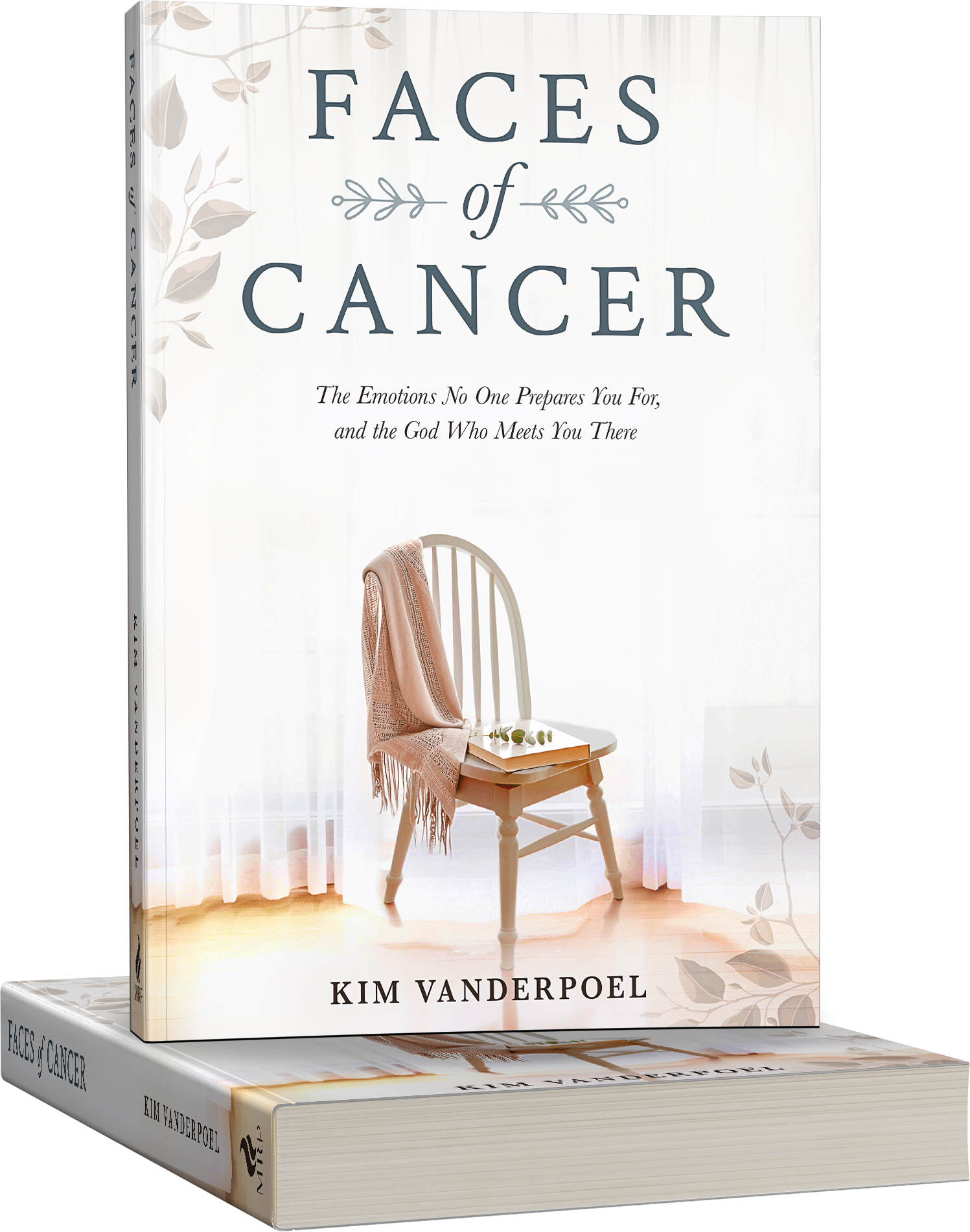
There are emotions no diagnosis prepares us for and no treatment plan can fully address. That is why I wrote Faces of Cancer: The Emotions No One Prepares You For, and the God Who Meets You There.
It is not a book about getting your emotions under control.
It is about making room for what is actually there—and discovering that God can meet us in fear, grief, anger, vulnerability, and the other places we might rather hide.
These are some of the faces cancer wears.
There are emotions no diagnosis prepares us for and no treatment plan can fully address.
That is why I wrote Faces of Cancer: The Emotions No One Prepares You For, and the God Who Meets You There.
It is not a book about getting your emotions under control.
It is about making room for what is actually there—and discovering that God can meet us in fear, grief, anger, vulnerability, and the other places we might rather hide