The Things Nobody Tells You About Life After Treatment
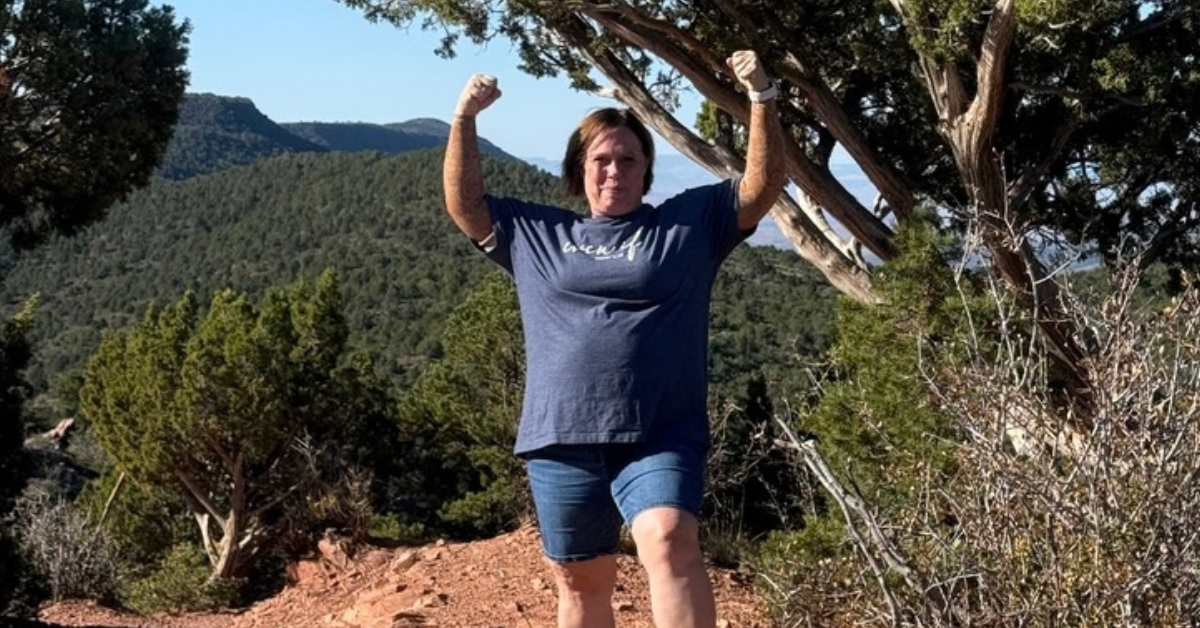
During chemotherapy, especially on the hardest days, I used to tell myself one thing over and over:
A year of my life for the rest of my life.
That was the bargain I had made in my head. I could give up a year. I could get through treatment, do what needed to be done, endure the appointments and the side effects and all the things cancer had suddenly added to our lives, because eventually I would get to go back.
Back to normal. Back to my old energy. Back to my old body. Back to the life I had before cancer entered it.
I really believed that, and maybe it was a little naive, but at the time I needed to believe something. I needed to picture a finish line somewhere out in front of me.
What I did not understand yet was that treatment could end without the cancer experience ending.
That may have been one of the biggest surprises of survivorship.
I Thought “Done” Meant Done
I started noticing the shift after chemotherapy and before radiation. Treatment was moving forward, the hardest part seemed like it should be behind me, and eventually my hair would start growing again. From the outside, all of those things can look like signs that life is returning to normal.
I think sometimes people see the hair coming back and think, There she is. She’s back.
But I did not feel back. Not really.
There were still appointments and radiation, still fatigue, still a body that had been through far more than I understood at the time, and still emotions I had barely begun to sort through.
Somewhere in that season, I started realizing that I was not simply going to step back into the version of myself who had existed before cancer. I kept waiting for her to show up again, but recovery was turning out to be much more complicated than that.
Hair Growing Back Is Not the Same as Being Back to Normal
This is one of those things I wish more people understood about life after cancer treatment: recovery has very visible milestones, but many of the hardest parts of survivorship are completely invisible.
Hair grows. Surgical incisions heal. Treatment appointments eventually stop filling the calendar, and from the outside your life begins to look normal again.
Meanwhile, your body may still be trying to catch up.
Fatigue was one of the biggest surprises for me. During treatment I knew I would be tired, but I did not understand how long that fatigue could linger or how much it could continue to affect everyday life. There were so many times when my mind wanted to do something and my body simply said, Nope, not today.
And years later, that can still happen.
Most people do not see it because fatigue is not exactly something you can point to. My husband sees it, though. He knows when it sneaks up on me and suddenly changes what the rest of the day is going to look like.
I will admit, that can still make me angry.
I have never been particularly good at having limits placed on what I can accomplish (some things apparently take a lifetime to learn), and survivorship has required me to learn over and over that the body I have now may not always have the same limits as the one I remember.
Some Side Effects Show Up Later
I also had no idea how many things could surface after treatment was finished.
About a year or so after radiation, I found myself needing a tremendous amount of dental work, including root canal after root canal. I think I ended up having three or four of them, and it certainly was not something I had been sitting in the infusion chair worrying about.
When you are first diagnosed, your brain is already carrying more questions than it knows what to do with.
Will treatment work? How sick am I going to get? Can I keep working? How will this affect my family? How do I get through this week?
You are not necessarily thinking about what your teeth may need a year from now, what scar tissue may feel like ten years later, or what other effects might slowly become part of your life.
That is part of what makes survivorship complicated. Some consequences are immediate, while others unfold so gradually that you do not even realize they are part of the cancer story until much later.
I Didn't Know Breast Implants Had Their Own Timeline
After my bilateral mastectomy and reconstruction, I had breast implants, and at the time I did not fully understand that implants are not necessarily a forever solution.
I also knew very little about some of the concerns women were beginning to discuss around implants, including breast implant illness. So when I reached the point where mine were about ten years old and needed to be addressed, I began looking at my options.
That decision eventually led me to DIEP flap reconstruction, where tissue from my abdomen was used to reconstruct my breasts.
Another major surgery. Another recovery. Another chapter I never imagined when I was sitting in chemotherapy telling myself, A year of my life for the rest of my life.
By then, cancer had been gone from the center of my daily life for a long time, yet here I was once again making decisions and recovering from surgery because of something that had begun years earlier.
The cancer was gone.
The ripple effects were not.
I Didn't Know My Body Would Remember
I did not know that years later something as ordinary as getting blood drawn could become its own reminder.
My veins are difficult now. After chemotherapy and years of medical procedures, getting labs can sometimes take several attempts, which means a “simple blood draw” may involve multiple pokes and a little more mental preparation than I would prefer to admit.
In the grand scheme of cancer treatment, that sounds like such a small thing.
But small things can carry big memories.
A smell. A hospital hallway. A needle. A blood pressure cuff. A certain type of waiting room.
The body remembers more than I ever expected it to, and sometimes the nervous system seems to remember before the mind even has a chance to catch up.
I Didn't Know About Medical Trauma
For years, I did not have language for some of what I experienced after cancer.
I knew I sometimes felt anxious around medical care. I knew certain appointments brought tears that seemed completely out of proportion to what was actually happening in that moment, and I knew there were situations that could suddenly make me feel as though I had been dropped right back into one of the hardest seasons of my life.
What I did not know was that medical trauma was a real thing.
You can be years removed from treatment, living a full and ordinary life, and still have your body respond as though something threatening is happening again. Your mind may know that this appointment is routine, but some deeper part of you remembers what it felt like when appointments were not routine at all.
For a very long time, I did not talk about that.
Most people had forgotten the hell I had gone through, and to be fair, I rarely brought it up. From the outside I was a cancer survivor who had gone on with life.
Inside, there were still pieces of that experience I had never really understood.
Then One Day Oncology Lets You Go
There is another part of survivorship that I was not prepared for, and strangely enough, it comes with very good news.
Eventually, your oncologist may dismiss you from regular oncology care.
You have reached the milestone everyone hoped you would reach. You no longer need the same level of follow-up, the appointments become less frequent, and eventually you may be sent back to your primary care provider.
That is wonderful.
And it can also feel strangely unsettling.
For years, your oncology team knew the details of your cancer story. They knew the treatments you received, the side effects you experienced, the things everyone watched carefully, and the reasons certain symptoms made your heart race a little faster.
Then suddenly you are released back into regular healthcare.
I am incredibly grateful for good primary care, but the reality is that primary care providers may not always have answers for every long-term effect of cancer treatment. Oncology knew the map because they had traveled the road with you; primary care may be meeting you much farther down that road.
Sometimes being released feels a little like being told, You're good to go!
And part of you is thinking, Great...but where exactly am I going?
Survivorship Can Feel Lonely
Eventually there comes a point when everyone else moves on.
And honestly, they should.
Life keeps going. Your family returns to ordinary routines, your friends stop asking about appointments, and cancer no longer enters every conversation. There is something beautiful about reaching the point where you can go an entire day, week, or even longer without cancer being the main character in your life.
But there can also be a loneliness to it because you remember what happened, even when no one else is thinking about it anymore.
You remember what it took to get through those months. You remember the fear and the exhaustion, the waiting rooms and the scans, the things your family went through alongside you, and the ways you know you are different because of it.
For the first several years, I was especially aware of the anniversary of my diagnosis, and I will admit that it hurt when my family did not acknowledge the date.
I remember thinking, How can no one remember this day?
It was one of the biggest days of my life.
Eventually I realized something that seems so obvious now: they were not carrying that date the same way I was.
So I started reminding them.
A week or so beforehand I might mention that my diagnosis anniversary was coming, and now I may get a message that says, So glad you fought, Mom. Love you.
That means something to me.
Sometimes the people who love us are not intentionally forgetting what mattered; they simply do not know what we are still carrying unless we tell them.
“Back to Normal” May Be the Wrong Goal
I spent a long time thinking the goal of recovery was to get back to normal, as though somewhere out there was the exact life I had before cancer, waiting patiently for me to return.
But I am not sure that life exists anymore.
Cancer changes things, and some of those changes are permanent. Bodies change. Relationships change. Priorities change. Fear shows up in places it did not used to live, and sometimes gratitude does too.
That does not mean life cannot be full again. It does not mean joy is gone, and it certainly does not mean cancer gets to define the rest of the story.
It simply means the story is different.
There can be grief in admitting that because, for a while, I really wanted my old life back. I wanted the old body and the old energy and the version of me who did not know what it felt like to sit across from a doctor and hear the word cancer.
But there can also be freedom in letting go of the expectation that I am supposed to become exactly who I was before.
If I stop constantly trying to find the woman I used to be, I can begin paying attention to the woman who is here now.
Survivorship Is Its Own Season
Treatment ending deserves to be celebrated.
Absolutely.
Ring the bell if you want to ring the bell. Throw the party. Take the picture. Eat the cake. Mark the milestone and thank God you made it through.
But do not be surprised if you also feel unsettled, tired, sad, angry, relieved, grateful, lost, or unsure what comes next. You can feel several of those things at the same time, which is something cancer teaches us quite well.
You may have spent months or even years focused on staying alive, getting through the next treatment, managing side effects, and making it from one appointment to another. When all of that suddenly slows down, it can take some time to learn how to live without cancer taking up quite so much space.
And some pieces may never completely disappear.
The fatigue. The scars. The appointments. The fear that occasionally surfaces. The body that remembers. The anniversaries.
But there is something else that grows too.
Life.
Not the exact life you had before, perhaps, but life nonetheless.
The Rest of My Life Did Come
Looking back now, I think often about that sentence I repeated during chemotherapy:
A year of my life for the rest of my life.
I was wrong about one part of it because I did not get my old life handed back to me exactly as it was. Cancer left marks, some visible and some invisible, and apparently even after all these years there are still things I am learning about what that experience did to my body, my emotions, and the way I move through the world.
But I was right about something too.
There was a rest of my life.
There still is.
And maybe that is one of the things survivorship asks us to learn: how to hold both of those truths without needing one to cancel out the other.
Cancer changed me.
And cancer did not get everything.
A question to carry
What changed after treatment that you were not prepared for?
If You Are Navigating Survivorship
I’d use this section to create the pathway:
Explore Survivorship Resources →
For life after active treatment.
Read: When Cancer Feels Lonely →
For the parts of survivorship others may not fully understand.
Read: Grief After Cancer — Mourning What Changed →
For losses that can surface after treatment.
Explore Lymphedema Resources →
For practical support with long-term effects.
Treatment may end before the emotional journey does.
Faces of Cancer: The Emotions No One Prepares You For, and the God Who Meets You There was written for the parts of cancer that do not always end when treatment does — the fear, grief, anger, uncertainty, and questions that can follow us into survivorship.
Treatment may end before the emotional journey does.
Faces of Cancer: The Emotions No One Prepares You For, and the God Who Meets You There was written for the parts of cancer that do not always end when treatment does — the fear, grief, anger, uncertainty, and questions that can follow us into survivorship.