What to Bring Someone Who Just Heard “You Have Cancer”
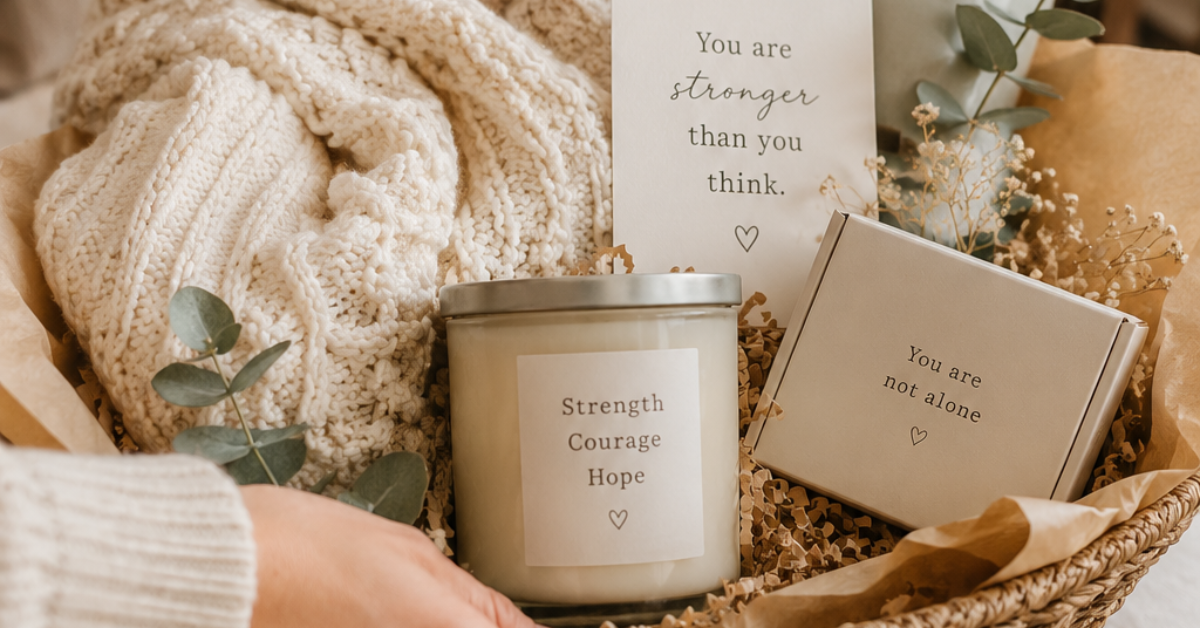
When someone you love is diagnosed with cancer, one of the first thoughts is often:
What can I do?
You want to help. You want to make something easier. You want to bring comfort. And yet cancer has a way of making even simple decisions feel complicated.
Do they need food? Flowers? A blanket? A gift card? Should you call? Should you give them space Should you show up?
The truth is, there is no perfect gift that can make a cancer diagnosis less frightening.
But there are thoughtful ways to say:
I see you. I am here. You do not have to carry all of this alone.
Start With What They Need Right Now
In the first days after diagnosis, life can become very noisy very quickly.
Appointments. Phone calls.Tests. New\ terminology. Family updates. Work questions. Insurance questions. And a lot of uncertainty.
This may not be the moment for something elaborate.
Often, simple is better.
Think about things that reduce one small burden or offer one small comfort.
Bring Food — But Make It Easy
Food is one of the most practical gifts you can give. But there are a few ways to make it more helpful. Choose something that can be reheated easily. Use disposable containers if possible. Label what it is and include simple heating instructions. And if you are not sure about dietary restrictions, ask.
Gift cards can also be wonderful.
Restaurant cards.
Grocery cards.
Meal delivery.
Coffee.
Sometimes the gift is not the meal itself.
It is removing one decision from an already full day.
Think Comfort, Not Clutter
A few comfort items can go a long way.
A soft blanket.
Cozy socks.
Lip balm.
Unscented lotion.
A simple journal.
A water bottle.
A small devotional or prayer card.
A favorite snack.
A magazine.
A book that has nothing to do with cancer.
You do not need to fill a giant basket. One or two thoughtful items can be enough.
And if you do want to create something more complete, this is exactly why I love putting together Hope Baskets — practical, comforting items gathered in one place for someone walking through a hard season.
Give Something That Helps With Appointments
The first few weeks can involve a surprising amount of information.
A notebook can be incredibly helpful for:
questions for the doctor
medication lists
appointment notes
names and phone numbers
things they want to remember later
A folder or simple organizer can help too.
Not glamorous.
Very useful.
Give Permission to Not Respond
This may be one of the best gifts you can offer.
If you send a text, consider saying:
You do not need to respond. I just wanted you to know I am thinking of you.
That sentence removes pressure.
People who are newly diagnosed can become responsible for reassuring everyone else.
They may feel like they need to answer every message.
Give them permission not to.
Offer Specific Help
“Let me know if you need anything” is kind. But it also creates another decision. Specific offers can be easier.
Try:
I am going to the grocery store Thursday. What can I pick up?
Can I bring dinner Tuesday?
I can drive you to your appointment if that would help.
I can sit with the kids for a couple of hours.
I am free Saturday if you need errands done.
Specific help is easier to accept.
Sometimes the Best Gift Is Company
Not every need is practical. Sometimes someone just needs another person to sit with them. Have coffee. Watch a movie. Talk about something other than cancer. Or sit in silence. You do not need the perfect words. You do not need to make them feel better.
Presence matters.
Be Careful With Advice
A cancer diagnosis can bring an avalanche of opinions. Treatments someone has heard about. Foods they should eat. Foods they should avoid. Supplements. Doctors. Stories about other people with cancer.
Most of the time, what someone needs first is not more information.
They need support.
Unless they ask for advice, let their medical team guide treatment decisions.
Your role can simply be:
I am with you.
Keep Showing Up After the First Week
The first days after diagnosis often bring a lot of attention. People call, meals arrive and flowers show up.
Then life around them starts moving again. But cancer does not.
The person you love may need support weeks or months later even more than they did at the beginning.
Put a reminder in your calendar. Check in again. Bring coffee. Send a card. Ask how treatment is going. Remember the scan date. Keep showing up.
Consistency can be a powerful kind of care.
What Not to Bring
There are no absolute rules, but a few things can be worth thinking about.
Strongly scented products may be difficult during treatment.
Large decorative items may create more clutter than comfort.
Books about cancer may not be welcome unless you know they want them.
And try to avoid gifts that quietly communicate:
You need to be positive.
They do not need pressure to perform hope.
They need room to be human.
A Few Thoughtful Ideas
If you are still wondering what to bring, here are a few simple options:
a meal or restaurant gift card
cozy socks or a soft blanket
lip balm and unscented lotion
a journal or notebook
a reusable water bottle
a small prayer or Scripture card
a favorite snack
a magazine or light book
grocery or gas gift cards
a handwritten note
a small Hope Basket
a Blue Bag for a particularly hard day
None of these need to be expensive.
Thoughtfulness matters more than the price tag.
What to Say
Sometimes the hardest part is not knowing what to bring.
It is knowing what to say.
You do not need a profound message.
Something simple is enough:
I am so sorry.
I love you.
I am here.
You do not have to respond.
You do not have to do this alone.
Those words may matter more than anything in the basket.
Hope Does Not Always Need a Bow
When someone is diagnosed with cancer, we often wish we could make it better.
We cannot.
But we can make the day a little softer. We can bring dinner. Sit beside them. Drive them somewhere. Send a text. Remember an appointment. Pray. Show up again next week.
Hope does not always arrive as a big, inspirational moment.
Sometimes it looks like soup in a disposable container.
A gift card tucked into an envelope.
A friend sitting in the passenger seat.
A simple note that says:
I am still here.
And sometimes that is exactly what someone needs.
A question to carry
What is one small thing you could do this week to make someone’s hard season a little easier?
Helpful Resources
Build a Hope Basket →
For thoughtful, practical comfort items.
Learn About Blue Bags →
For a small “thinking of you” gift when someone is having a hard day.
Words for the Journey →
Prayer and Scripture cards for hard seasons.
Cancer & Survivorship Resources →
For practical and emotional support through diagnosis, treatment, and beyond.
Cancer affects more than the treatment plan.
A diagnosis can bring fear, overwhelm, grief, and questions that no appointment schedule can fully address.
Faces of Cancer: The Emotions No One Prepares You For, and the God Who Meets You There was written for that part of the journey.